
Coins being in a perfect state, never used, cost tens of times more than the same coins having scratches or signs of use.
For example, a coin being in MS-69 state can cost $100, the same coin being in MS-70 state can cost $1000, showing how much a small change can push the price.
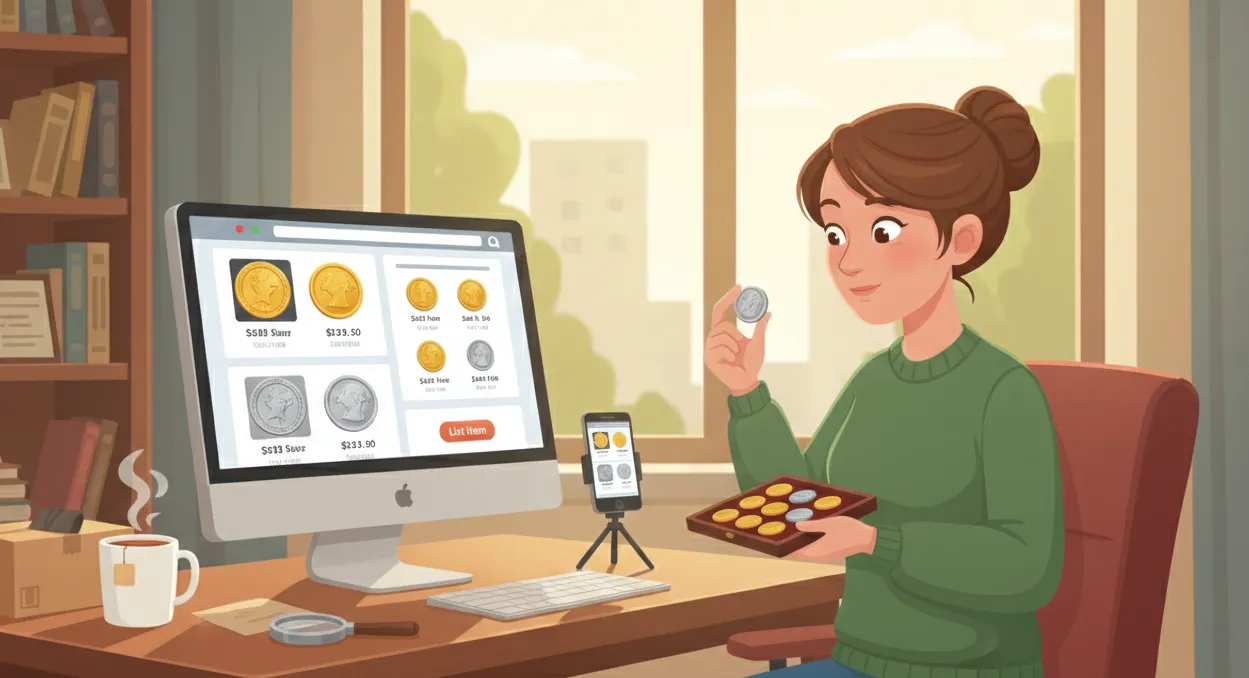
The collector’s goal is not just to gather rare coins, but also to keep them in the best state possible or, when safe, to better their look without damage and regularly check them via a coin scanner.
Any wrong action, such as hard cleaning or wrong keeping, can forever lower the price, making a piece of value into a common one.
Rules Not to Break
Some actions always lower the coin’s worth.
Breaking these rules makes the coin damaged, lowering its coin study value.
Using sandpaper, cleaning powders, hard brushes, or even a cloth having a rough side is not allowed as they leave small lines.
These lines are seen at once under a glass or when checked by an expert, quickly lowering the grade.
Using acids or strong chemicals to make it shine. Such coins get a low grade, even if they were not used for trade. Strong liquids can eat into the metal, leaving signs of damage.
Patina is a safe and historical layer, resulting from natural aging, built over many years.
Taking it all away lowers the collector value of silver and copper coins, the coins looking newly made, strangely.
Patina, especially when nice and colored, can by itself raise the price.
The edge is the side of the coin; its damage, scratches, or signs of hits always hurt the grade — always hold the coin only by the edge.
Placing the coin in direct sunlight or keeping it where heat and wetness change much, causing fast and uneven aging, making ugly spots and damage appear.
Main Ways to Make the State Better
Making a coin’s state better does not mean cleaning it until it shines. It mostly means rightly taking away light dirt, which can spoil the metal over time, and making the coin safe. All actions should be gentle.
Taking Away Light Dirt
- Soaking in clean water
This is the safest way to take away dry dirt and dust, not touching the patina.
The coin can stay in the water for many days or weeks, the dirt leaving on its own, becoming soft.
It is needed to change the water every day.
- Soaking in soap liquid
Using gentle, plain baby soap without smell. Long soaking makes dirt soft, not hurting the metal.
After the soap wash, the coin must be washed well with clean water.
- Using a wooden stick
To take away dirt from the raised part of the coin with much care, but only under a glass and without pressing hard.
Wood is softer than metal, not leaving scratches, unlike steel or plastic.
The work must be slow and careful, taking away dirt bit by bit.
- Using pure alcohol or acetone
Used for taking away greasy spots, glue, signs, sap, or paint.
These liquids quickly disappear, not working with the metal, and are safe for cleaning.
Putting the coin in acetone for some minutes helps take away all the extra organic stuff.
Making Safe and Keeping Patina
Patina is aging, making the coin safe from more damage. Making the state better often means making this patina safe and stopping bad changes.
After any chemical use, even soft ones like weak vinegar or lemon acid, used for taking away serious damage, the coin needs to be made neutral.
This is done by dipping the coin in a weak baking soda solution.
Making it neutral stops the chemical actions, which could go on and spoil the coin.
For older copper and bronze coins that might get more damage or develop the bronze disease. Putting on a thin layer of wax or paraffin makes a safe wall from air and wetness, stopping the damage. It is needed to put on the wax in a thin, hard-to-see layer without a coin value app.
Using special tight holders with gas that does not react for coins of the highest worth. This fully stops the metal from touching air and wetness.
Right Keeping: Safety from Enemies
The main enemy of a coin is not dirt, but wrong keeping, which makes aging happen, spots show up, and damage starts.
Right keeping saves the coin’s grade.
Things for Keeping
Special holders do not mix with the metal, close tightly, and are safe. Holders can be in different sizes for a tight fit around the coin.
Albums having pockets made of polypropylene are a safe material, not holding bad chemicals. Never use albums with pockets made of PVC.
Card holders with a clear window made of Mylar — a strong and cheap way to keep coins in a cardboard frame, closed with a small metal tool.
Stay away from high rooms, cellars, and places having much wetness or near chemicals. The best heat is room heat, keeping it steady.
PVC Disease
It means green, sticky spots showing up on coins kept in cheap plastic albums. PVC has chemicals inside that come out over time, making acids.
- If a coin is harmed, it must be put away from the rest of the collection right away
- Cleaning harmed coins is done with acetone or alcohol to take away the spots. This way of working needs care and checking, taking off all the sticky film
- Moving all coins from bad albums to safe holders. The harm from one coin can move to others nearby
Certification
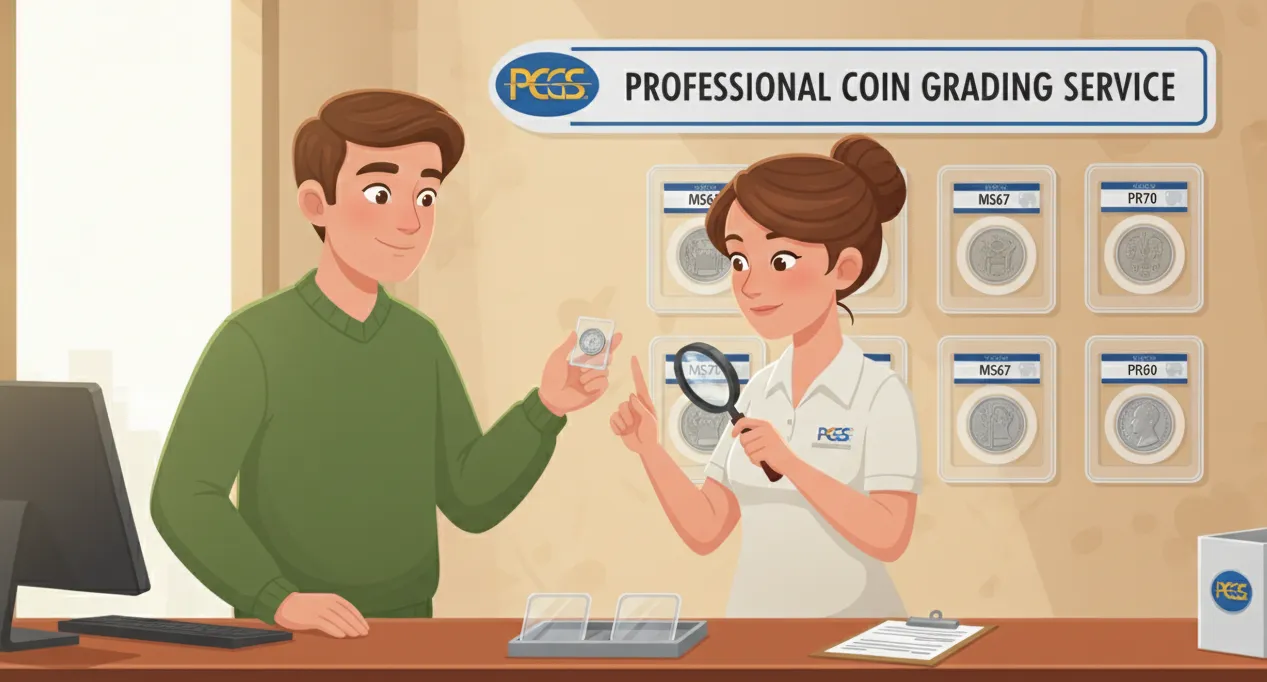
Certification is the way an outside expert company sets the coin’s state. Getting a high grade quickly raises the coin’s price, making the coin an item for world trade.
Why Grading Raises Worth
- Showing it is real. Experts say the coin is not a copy. This is the main rule for costly buys.
- Setting the exact state. A grade from 1 to 70 gives the buyer clear news about the quality. This stops talks between the seller and buyer about the coin’s state.
- Being used everywhere. Coins with a grade can be sold easily at world sales, because their grade is clear to all collectors in the world.
- Safety. The coin is put into a slab, keeping it safe from future damage, scratches, and air.
The Grading Process
Pick coins in the best state, making sure they are clean, without glue or grease signs.
Coins are sent to a large grading company, for example, PCGS or NGC, but you can check them for free with a coin identifier app.
Experts look at the coin, checking if it is real, if it has stamp faults, if it has scratches, and the shine quality.
The coin gets a number grade and a letter name. The coin is put into the sealed slab.
Choosing Coins for Grading
Send for grading only those coins that are in excellent or very good condition.
Coins having a low worth or bad damage should not be checked. The cost of checking can be more than the coin’s price.
Rare coins with known mistakes or low numbers made must always be checked, no matter their state.
Checking such a coin shows it is real.
| Action | Allowed | Not Allowed |
| Cleaning | Soaking in clean water, soap | Cleaning with a toothbrush, powder |
| Spot Removal | Using acetone or alcohol | Using acids, white cleaners, and soda |
| Keeping | Polystyrene holders, Mylar, paper without acid | PVC pockets, leather bags |
| Touching | Hold the coin only by the edge | Touch the coin’s flat part with your hands, and breathe on the coin |
| Safety | Putting a small layer of wax, sand topping chemicals with soda | Using lacquer, glue, and strong polishes |
Making the Collection Look Better
More than the coin’s state, the way it is shown is also needed. A good collection set-up shows a serious way of working.
Setting up the Collection
- Sorting coins by topic, for example, by country, by year, by metal
A set-up collection looks more costly and sells better, making it easier for a buyer to find the parts they need.
- Making a list
A full list telling the year, number made, state, weight, and grade of each coin. A list shows a serious way of working, making selling easier. The list should be on a computer with a safe copy.
- Using one kind of keeping
All coins, when possible, should be in the same holders or slabs. This gives the collection one look, making it more pleasing for buyers, and makes keeping simpler.
Watching the Market and Adding to the Collection
- Watching prices at sales all the time helps understand which coins people want and how their price changes, giving news about the real worth of your coins.
- Talking with experts and joining coin clubs — the knowledge of other collectors and their words helps stay away from mistakes when buying and selling.
Sometimes coins from the same year can have small differences that make them much more costly. You need to know what exactly to look for.
- Buying coins already checked and graded is often better than buying coins without a grade, paying money to check them, and risking a low score.
Raising the collection’s worth is a way of working that needs patience and knowledge, not fast and risky moves.
The main secret to success is keeping the coin in a perfect state from the time it enters the collection.
Always start with gentle, safe ways of cleaning, not touching the patina, and use only materials without acid for keeping, staying away from PVC.
The surest way to raise the price is grading. Checking shows the coin is real and its state, making it pleasing to world buyers, ready to pay a high price for a promise of quality.
Remember, a coin being in MS-70 state has not seen faults, and a coin with even a small scratch loses a big part of its collector value.collector value.